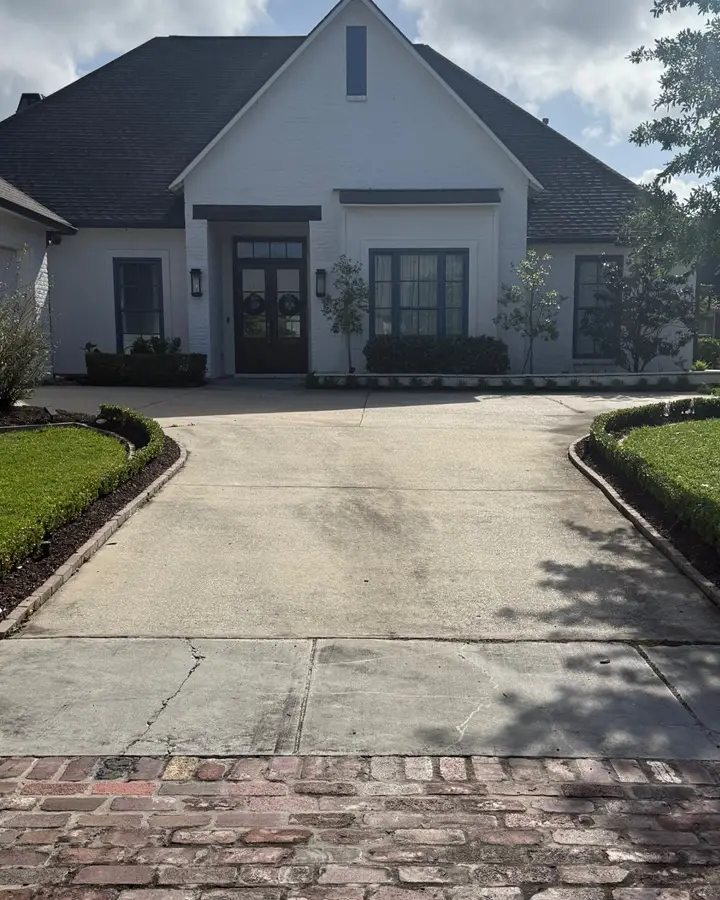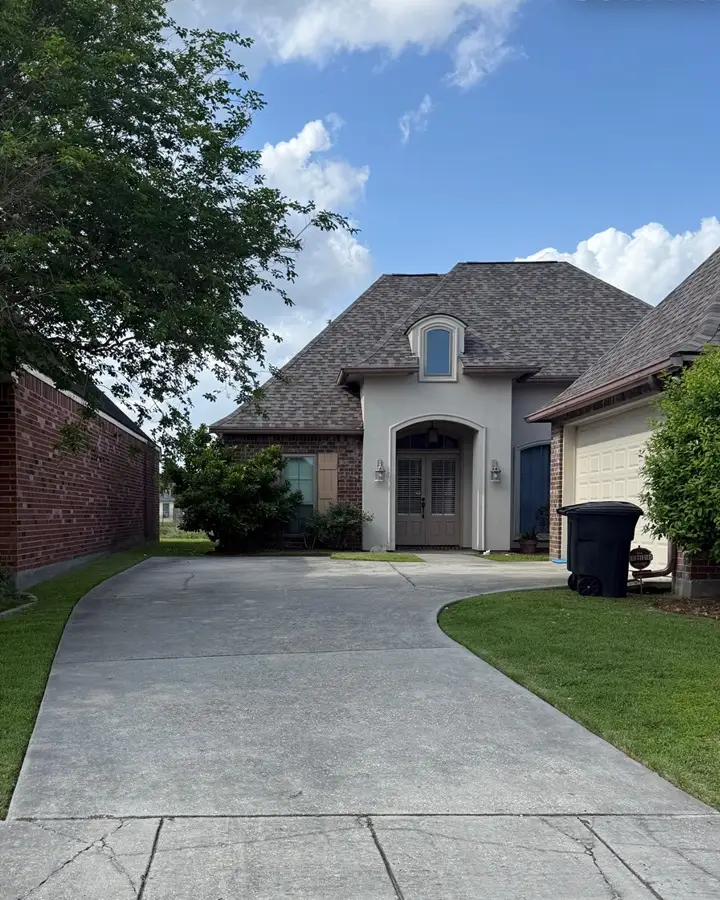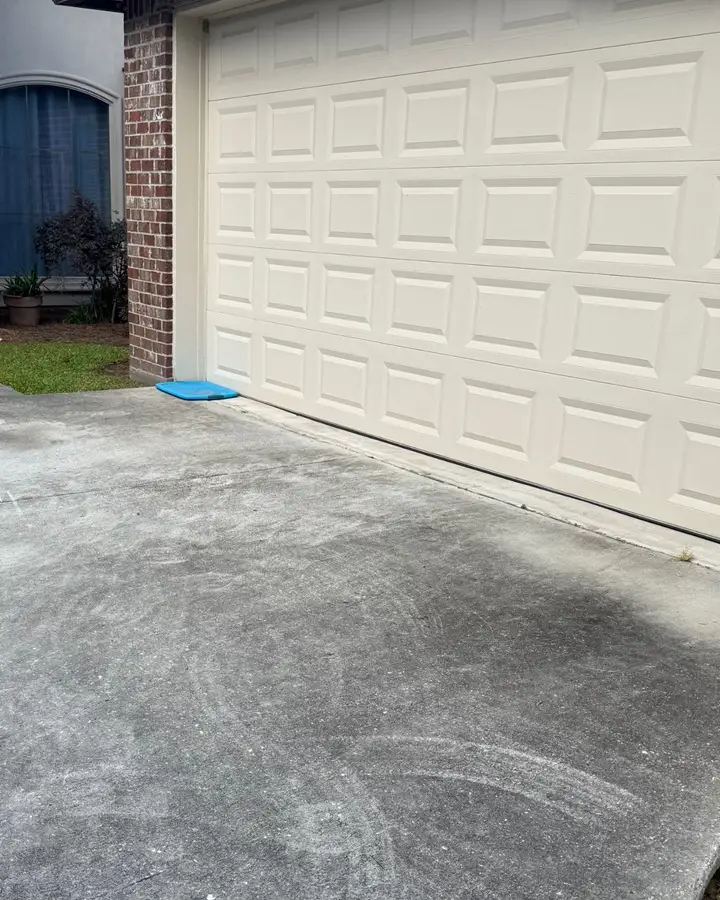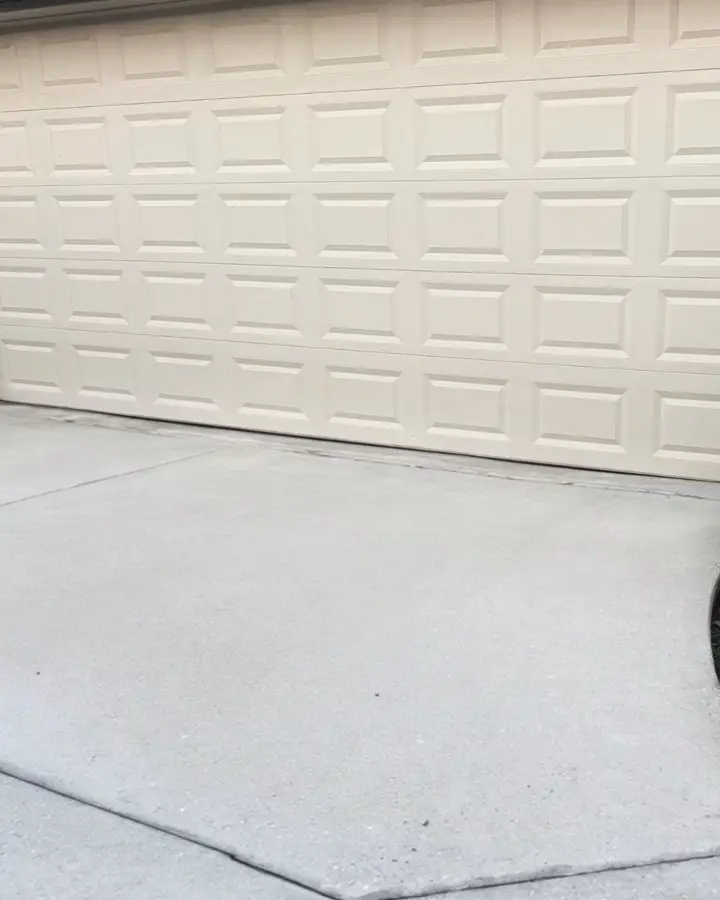
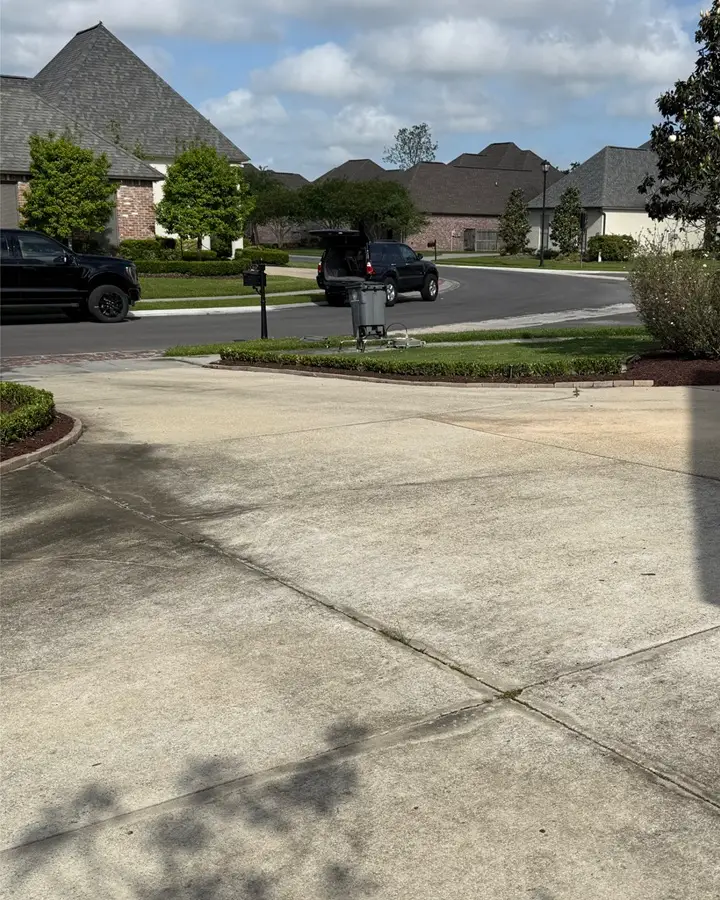
 Before
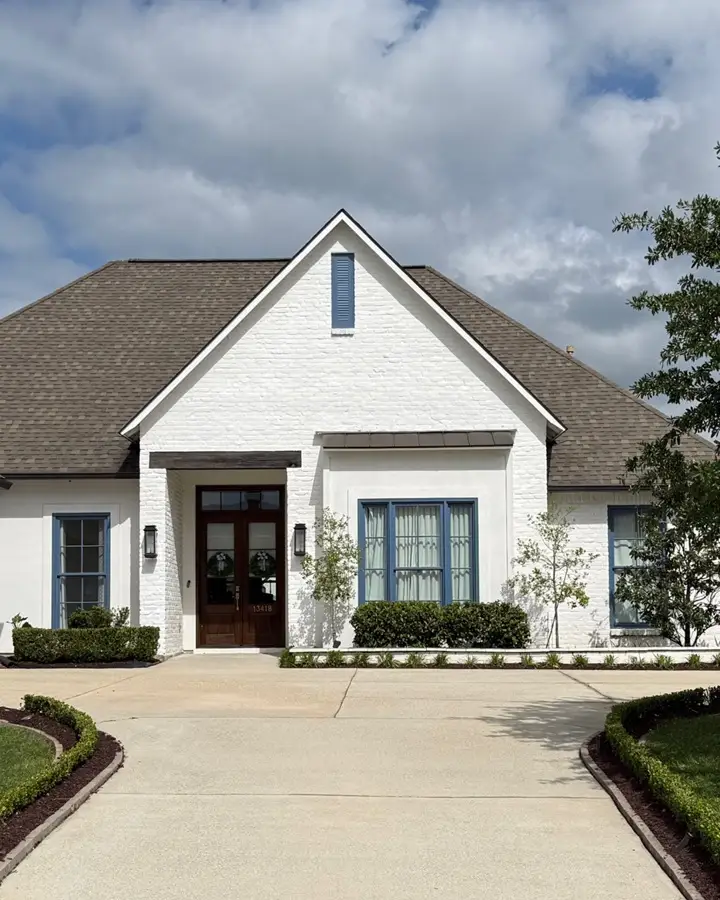
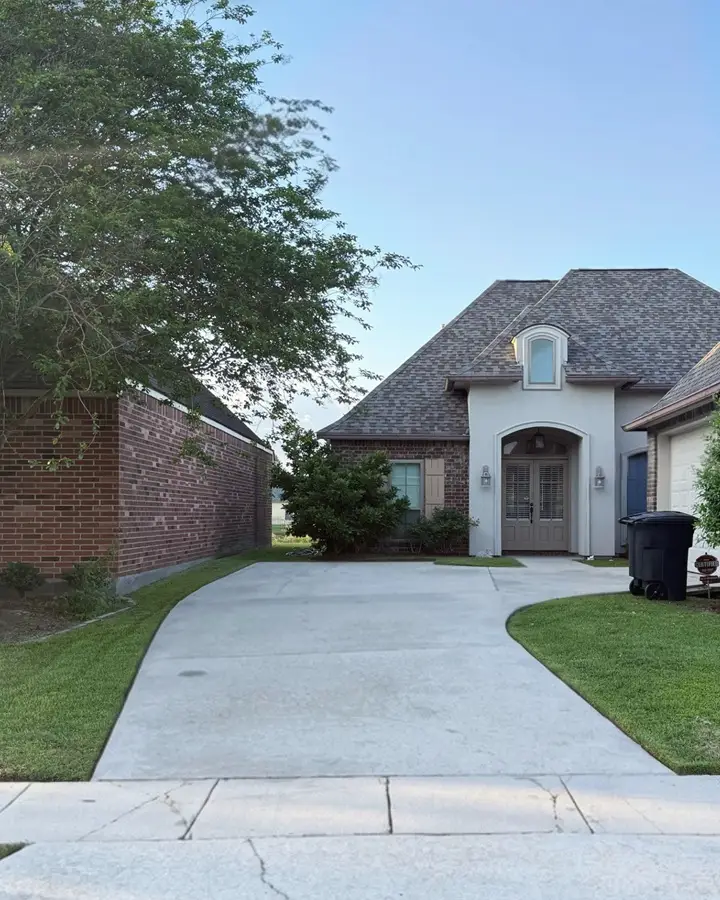
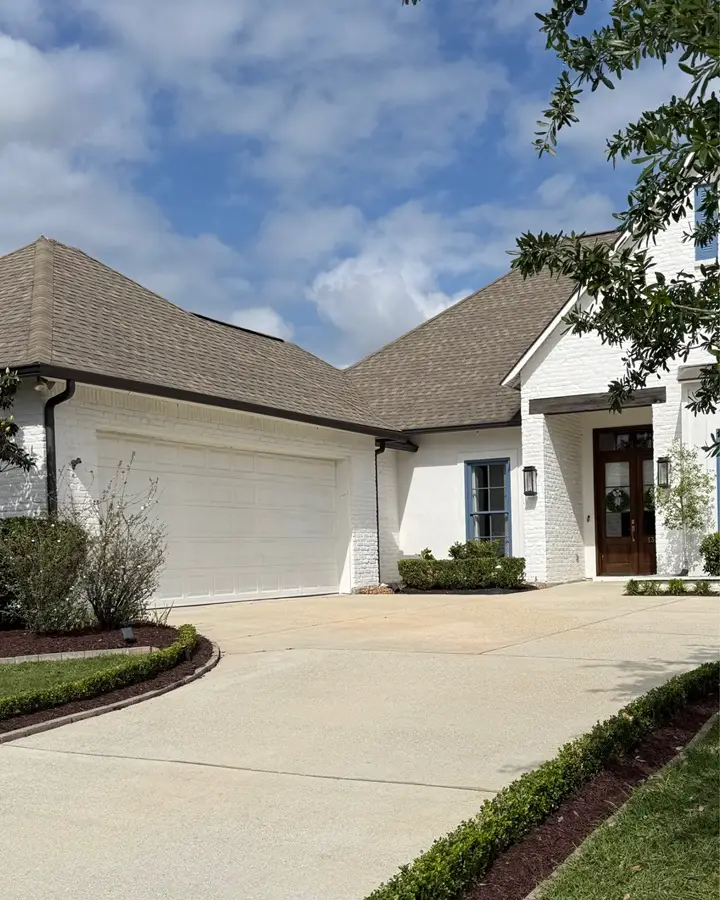 After
Driveway corner
The short answer: it’s alive
In South Louisiana, the most common reason a driveway turns dark is living growth: mildew, algae and the dirt they trap. Concrete is porous, and those tiny pores hold moisture. Add our heat, humidity and frequent rain, and the surface becomes a place for mildew and algae to settle in and spread. Over a couple of years the whole slab shifts from light gray to a muddy, blotchy dark gray, sometimes with a green or black tint in the shade.
It happens slowly enough that most people don’t notice until a neighbor’s driveway gets cleaned or they see an old photo of the house.
How to tell what you’re looking at
Mildew and algae
A general darkening across large areas, worst in shade, along the lawn edge and near downspouts. Often greenish in damp spots and black in drier ones. It feels slightly slick when wet. This is the big one, and it cleans up well.
Tire marks
Dark bands where cars turn into the garage or park every day. Rubber transfers onto concrete, especially in summer heat. These usually come out with a proper cleaning.
Oil and fluid stains
Defined dark spots, often with a sheen, where cars sit. These are soaked into the concrete and need a degreaser pretreatment. Our guide on removing oil stains covers them in detail.
Leaf and tree stains
Brown or orange outlines of leaves, berries or pine needles. Tannins in leaves leach into wet concrete. They usually lighten a lot with cleaning.
Rust and red clay
Orange or reddish spots and streaks from furniture, fertilizer, irrigation water or clay runoff. These need a specific treatment, not just pressure.
Why some parts go dark first
Growth follows moisture. That’s why the same few spots darken first on almost every Baton Rouge-area driveway:
- Edges along the lawn, where sprinklers and runoff keep the concrete wet.
- Under trees, where shade keeps it from drying and leaves add tannins.
- The apron near the street, which collects runoff and tire grime.
- Near downspouts, where roof water lands on the slab.
- The north side of the house, which barely gets sun.
The driveway in the photo above shows exactly that pattern: dark where it stays damp and shaded, lighter where the sun hits.
Can you clean it yourself?
You can make progress with a rented pressure washer, but on a full driveway there are two common problems. First, a wand alone leaves stripes, because it’s nearly impossible to keep the nozzle at the same distance across hundreds of square feet. Second, holding the tip too close can etch the concrete, leaving lighter, rough patches that look worse than the dirt. Bleach and household cleaners help on small spots but are hard to apply evenly and can damage your lawn edge. We go through the tradeoffs honestly in DIY vs professional pressure washing.
How a professional cleaning fixes it
We clean driveways with commercial pressure and a flat-surface cleaner, a round hood with spinning spray arms that keeps an even distance from the concrete and overlaps each pass. That’s what gets the whole slab back to one even color. Oil, rust and heavy growth get pretreated first. Edges, joints and curbs get detailed, and everything is rinsed off. Most driveways take one to two hours. See driveway cleaning
Keeping it from coming back
In our climate the growth will return eventually. The goal is to keep it from getting established again:
- Clean the driveway once or twice a year. Shaded driveways need the higher end.
- Point sprinklers away from the concrete where you can.
- Blow off leaves and pine straw before they sit wet for days.
- Consider sealing the concrete after cleaning so less moisture and dirt soak in.
For a full schedule, see how often to pressure wash in Louisiana.